In this article
A family petition is more than a stack of forms. It is the first formal opportunity to show USCIS that a real, qualifying family relationship exists. This I-130 supporting documents checklist can help you organize that proof with care, but the right documents depend on who is petitioning, who is being sponsored, and the facts of the relationship.
For many families, the petition carries years of hope, separation, and planning. A missing document does not automatically end a case, but it can lead to delays, a request for evidence, or questions that could have been prevented with a complete filing. Careful preparation gives your family a clearer starting point.
Start With the I-130 Filing Basics
Form I-130, Petition for Alien Relative, is filed by a U.S. citizen or lawful permanent resident to establish a qualifying relationship with a foreign national relative. Approval of the petition does not itself grant a green card, work authorization, or permission to enter the United States. It is the first step in a larger process that may continue through adjustment of status in the United States or consular processing abroad.
Before gathering evidence, confirm the petitioner’s status and the beneficiary’s relationship category. A U.S. citizen may petition for a spouse, child, parent, or sibling. A lawful permanent resident may petition for a spouse or unmarried child. Each category has different legal requirements and, in some cases, different waiting periods.
Use the current USCIS form instructions and filing fee information when preparing a submission. Immigration forms, fees, mailing addresses, and evidence requirements can change. Filing an outdated form or sending a package to the wrong location can create a frustrating and avoidable delay.
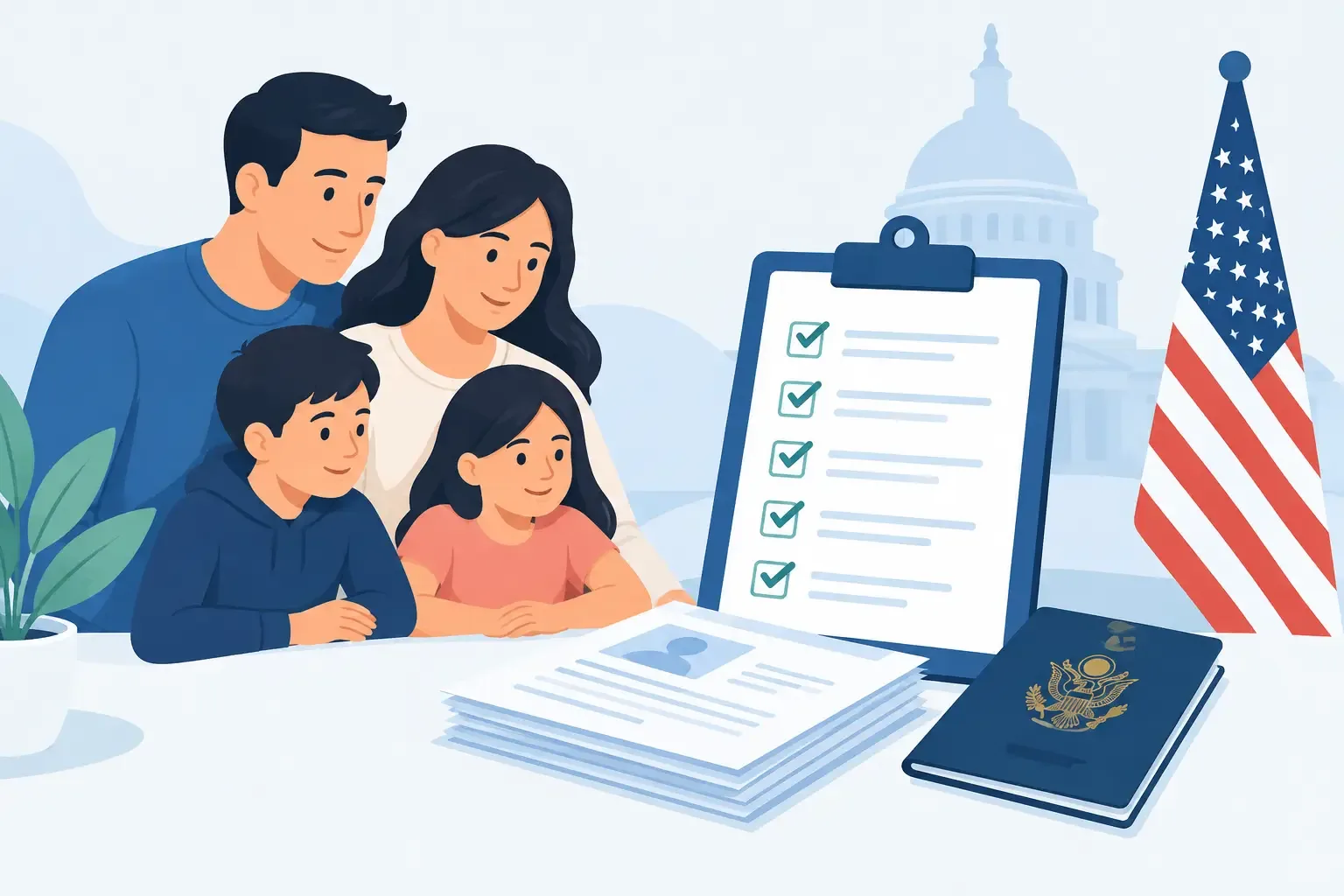
I-130 Supporting Documents Checklist
Every I-130 package generally needs evidence of the petitioner’s immigration status, proof of the claimed relationship, and readable copies of documents in English or accompanied by a proper certified translation. The documents should tell a consistent story. Names, dates, prior marriages, addresses, and family history should match across the filing whenever possible.
Documents from the petitioner
The petitioner should provide proof of U.S. citizenship or lawful permanent resident status. Depending on the circumstances, this may include a copy of a U.S. birth certificate, U.S. passport, naturalization certificate, certificate of citizenship, green card, or other acceptable evidence.
The petitioner should also include government-issued identification when appropriate, such as a driver’s license or passport biographic page. If the petitioner’s current name differs from the name on a birth certificate, passport, or immigration document, include evidence explaining the change, such as a marriage certificate, divorce decree, or court order.
Documents from the beneficiary
The beneficiary’s birth certificate is often central to the filing, especially in parent-child and sibling cases. Include a copy of the beneficiary’s passport biographic page if available. If a document is not in English, provide a full English translation with a certification from the translator stating that the translation is complete and accurate and that the translator is competent to translate it.
When official records are unavailable, incomplete, or contain errors, do not simply ignore the problem. Some cases require secondary evidence, affidavits, or an explanation of why the primary record cannot be obtained. The correct response depends on the country, the record type, and the particular inconsistency.
Proof for a marriage-based petition
A marriage certificate proves that a legal marriage occurred. It does not always prove that the marriage is genuine. USCIS may look for evidence that the couple entered the marriage in good faith and intended to build a life together, rather than marrying only for an immigration benefit.
Useful evidence may include:
- Joint leases, mortgages, utility bills, or homeowner documents
- Joint bank, credit card, insurance, tax, or retirement records
- Photos together over time, including with relatives and friends
- Travel records, correspondence, call logs, or messages that reflect an ongoing relationship
- Birth certificates for children born to the couple, if applicable
- Affidavits from people with personal knowledge of the relationship
There is no magic number of photos or bank statements. A few well-organized documents that show shared responsibility over time are usually more persuasive than a large, disorganized collection of repetitive papers. Couples who have lived apart because of work, immigration status, school, safety, or family obligations can still present a strong case. They should explain the separation honestly and provide evidence of how they maintained their relationship.
Both spouses must also document the legal end of every prior marriage. This may mean divorce decrees, annulment records, or death certificates. Missing proof of a prior marriage’s termination is a common reason USCIS questions an I-130 filing.
Proof for other family relationships
For a parent petitioning for a child, or a child petitioning for a parent, birth certificates generally must show the required parent-child connection. The details matter. A father-child relationship can involve additional legal considerations depending on whether the parents were married and the child’s age and circumstances.
Sibling petitions usually require birth certificates showing that both people share at least one parent. If records show different names, dates, or parents, additional civil records and explanations may be necessary. For stepchildren, stepparents, adopted children, and cases involving custody or legitimation, the rules can be particularly technical. Do not assume that a close family relationship automatically meets the immigration definition.
Organize the Packet So USCIS Can Follow It
A clear filing is easier to review. Begin with the forms and filing fee or fee waiver request, if eligible. Then add a cover letter identifying the petitioner, beneficiary, relationship category, and enclosed evidence. Use labeled sections and place related documents together.
Do not send original civil documents unless USCIS specifically asks for them. Keep complete copies of everything filed, including the final signed forms, payment confirmation, delivery record, and all supporting evidence. If USCIS later sends a receipt notice, request for evidence, or interview notice, those copies will help you respond accurately.
Avoid submitting altered documents, misleading affidavits, or evidence that does not accurately represent the relationship. A weak document can be explained. False information can cause far more serious consequences, including denial, allegations of fraud, and future immigration problems.
Address Complicated Facts Before Filing
Some I-130 cases need more than a standard checklist. Prior immigration filings, visa overstays, entries without inspection, removal proceedings, criminal history, prior marriages, prior petitions, age-out concerns, and possible marriage fraud findings can affect the path forward. An approved I-130 may not solve every issue, particularly if the beneficiary must later apply for a green card or visa.
Be direct about difficult facts from the beginning. Immigration law often provides options, but those options depend on timing and details. Trying to hide a prior denial, a different name, or an immigration history problem can make a manageable issue much harder to resolve.
At Anyere Law Firm, families can receive guidance that is both personal and practical. Attorney Nji Anyere understands the stakes of an immigration journey and works to help clients prepare filings that reflect the truth of their family story while protecting their legal options.
A Strong Petition Is Clear, Honest, and Complete
Before filing, read every answer on the form aloud with the petitioner and compare it against the supporting records. Check names, dates of birth, addresses, prior marriages, and immigration history. Make sure signatures are present and translations are complete.
No checklist can replace legal advice tailored to your family, especially where records are missing or the immigration history is complex. Still, a well-organized petition can reduce uncertainty and let USCIS see what matters most: the genuine family relationship you are asking it to recognize.