In this article
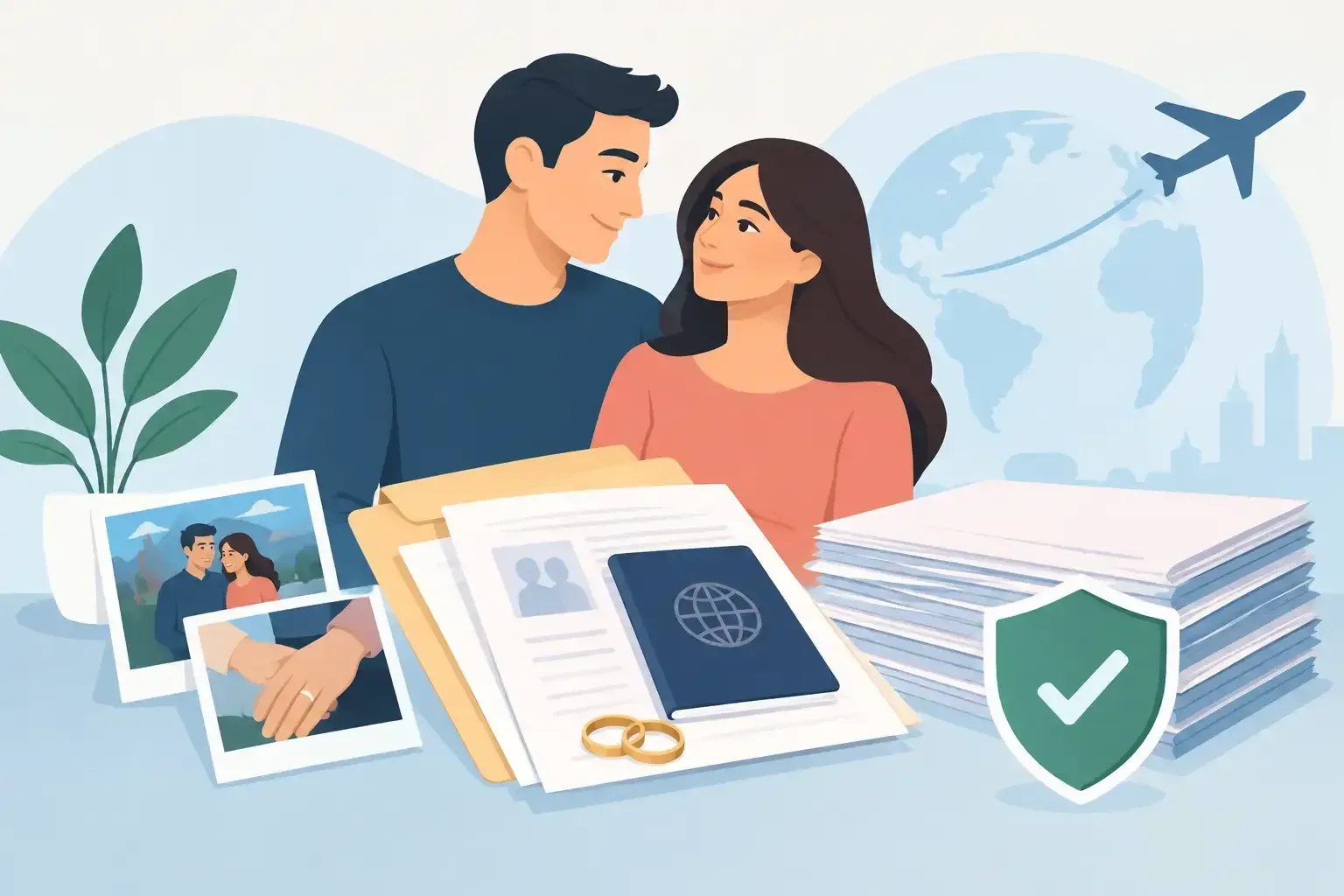
A stack of documents is not the same thing as a convincing case. Strong marriage visa evidence tells a clear, honest story: two people built a life together, made shared decisions, and intend to continue their marriage in the United States. The goal is not to overwhelm an immigration officer with paper. It is to give the officer credible proof that your relationship is real.
For couples pursuing a spouse visa or a marriage-based green card, the process can feel deeply personal. You may be asked to document private parts of your life while managing work, children, distance, different cultures, or a prior immigration history. Careful preparation can make that process more manageable and help prevent avoidable delays.
What Marriage Visa Evidence Must Show
U.S. Citizenship and Immigration Services, or a consular officer in an immigrant visa case, generally wants evidence that the marriage was entered into in good faith. In plain English, that means you married because you intended to build a life together, not only to obtain an immigration benefit.
There is no single document that proves a bona fide marriage. A marriage certificate proves that a legal marriage occurred, but it does not by itself explain the relationship behind it. Officers commonly look at the total picture: how the relationship developed, how the couple communicates, whether they combine responsibilities, and whether people in their lives know them as a married couple.
The evidence needed can vary. A couple who has lived together for several years may have extensive financial and household records. A couple separated by a work assignment, military service, immigration restrictions, or safety concerns may need to show their commitment in other ways. The key is to be truthful and provide context rather than trying to make every relationship look the same.
The Most Persuasive Types of Marriage Visa Evidence
The best evidence often comes from ordinary life. Documents created for real-world purposes, before any immigration filing was anticipated, can carry particular weight because they are less likely to have been created solely for the case.
Shared home and financial responsibilities
Evidence of a shared residence is often valuable. This may include a lease or mortgage showing both spouses, utility bills, renter's or homeowner's insurance, mail sent to both spouses at the same address, and identification records listing the same home.
Financial records can also help show that a couple operates as a family. Joint bank account statements, shared credit cards, jointly filed tax returns, beneficiary designations, health insurance enrollment, and records showing one spouse as the other’s emergency contact may all be relevant. A joint account with no meaningful activity may raise questions, so submit records that accurately reflect how you use the account.
Not every couple combines money in the same way. One spouse may have poor credit, a separate business, cultural expectations around finances, or a practical reason to maintain individual accounts. If that is your situation, do not manufacture financial activity. Instead, include other reliable proof of shared responsibility, such as transfers for household expenses, receipts, insurance records, or a clear statement explaining your arrangement.
The history of your relationship
A well-organized relationship timeline can help an officer understand the story behind the documents. It may identify when you met, when the relationship became serious, important visits, the engagement or wedding, moves, and major family events. Keep the explanation concise and make sure dates match your other evidence.
Travel records are especially helpful for couples who spent time apart. Boarding passes, passport stamps, hotel confirmations, and photos from visits can show that you made real efforts to be together. Communications such as call logs, message records, emails, and video-call histories may also be useful, particularly for periods of long-distance separation.
You do not need to submit every message you have ever exchanged. A limited selection that shows consistent communication over time is usually more effective than hundreds of unreadable screenshots. Protect sensitive information when possible, but do not alter records in a way that changes their meaning.
Photos, family, and community connections
Photos are supporting evidence, not the whole case. Choose pictures from different dates, locations, and occasions: holidays, visits with relatives, wedding events, birthdays, outings, and everyday moments. Include brief captions with names, locations, and approximate dates. A collection of nearly identical selfies taken on one day will not tell the same story as photos showing a relationship over time.
Letters from friends and relatives can add useful context when they come from people with direct knowledge of the relationship. A strong letter explains how the writer knows the couple, what the writer has personally observed, and why the writer believes the marriage is genuine. General statements such as “they are in love” are less helpful when they do not include real details.
Children, pregnancy, shared caregiving, or blended-family responsibilities may be relevant evidence where applicable. Birth certificates, school records, medical insurance, and documentation of parental involvement can help illustrate family life. These materials should be handled thoughtfully because they often contain sensitive personal information.
Organize Your Evidence So the Story Is Easy to Follow
An immigration officer may have limited time to review a file. Organization is not merely cosmetic. It helps the strongest evidence stand out and reduces the risk that key details are missed.
Begin with a short cover letter or index that identifies each category of evidence. Place documents in chronological order when that helps show the relationship’s development. Label photographs and provide translations for documents that are not in English. If a document includes a translation, ensure the translation is complete and properly certified when required.
Avoid submitting duplicate materials simply to make the packet thicker. Ten bank statements that show ongoing joint activity are usually more useful than hundreds of loose transaction pages with no explanation. The same principle applies to photographs, chat logs, and affidavits. Quality, consistency, and context matter more than volume.
Keep copies of everything submitted. Immigration cases can involve additional requests for evidence, interviews, consular processing, or later petitions to remove conditions on residence. Maintaining an organized file will make future steps less stressful.
Common Problems That Can Weaken a Filing
Some evidence issues are easy to fix before filing. Others need a careful explanation. Conflicting addresses, dates that do not match, unexplained long separations, or forms that contradict prior visa applications can lead to questions. A rushed filing that ignores these issues may create more difficulty later.
Be particularly cautious about altered documents, staged evidence, or statements that are not true. Immigration authorities can compare information across applications, public records, interviews, and prior filings. A credibility problem can affect not only the current petition but also future immigration options.
Couples should also prepare for the possibility of an interview. Each spouse should be able to speak honestly about the relationship, daily routines, major life events, and shared plans. The purpose is not to memorize a script. It is to communicate truthfully and consistently. If there are unusual circumstances, such as living apart for work or maintaining separate finances, explain them directly rather than hoping they will not be noticed.
When Your Case Needs More Than a Standard Packet
Some marriage-based cases require a more individualized strategy. This may include a large age difference, a short courtship, a prior petition for another spouse, previous immigration violations, a criminal history, a prior finding of fraud, removal proceedings, or a marriage that began while one spouse was detained or facing deportation.
These facts do not automatically mean a case will be denied. They do mean that details matter and that the evidence should be selected with care. A couple may need to address concerns directly, provide stronger corroboration, or evaluate whether another legal issue affects eligibility before filing.
At The Anyere Law Firm, LLC, we understand that a marriage-based immigration case is about more than forms. It is about protecting a family’s ability to remain together. An experienced immigration attorney can review the full record, identify gaps before they become problems, and help present your relationship with the care and honesty it deserves.
Your life does not need to fit a perfect template to be real. Start gathering the records that reflect how you actually live, preserve them consistently, and seek legal guidance early when your history or circumstances are complicated. A clear, truthful case gives your family the strongest foundation for the next step.