In this article
A crash can leave you dealing with pain, medical appointments, missed work, a damaged vehicle, and calls from insurance companies. In the middle of all that, the Maryland car accident statute of limitations may not feel urgent. But a missed legal deadline can permanently end your ability to seek compensation, even when another driver clearly caused the collision.
For most injured people, the clock begins much sooner than they expect. Taking action early gives your attorney time to investigate what happened, document your losses, and protect your claim before a deadline becomes a crisis.
Maryland Car Accident Statute of Limitations: The Basic Rule
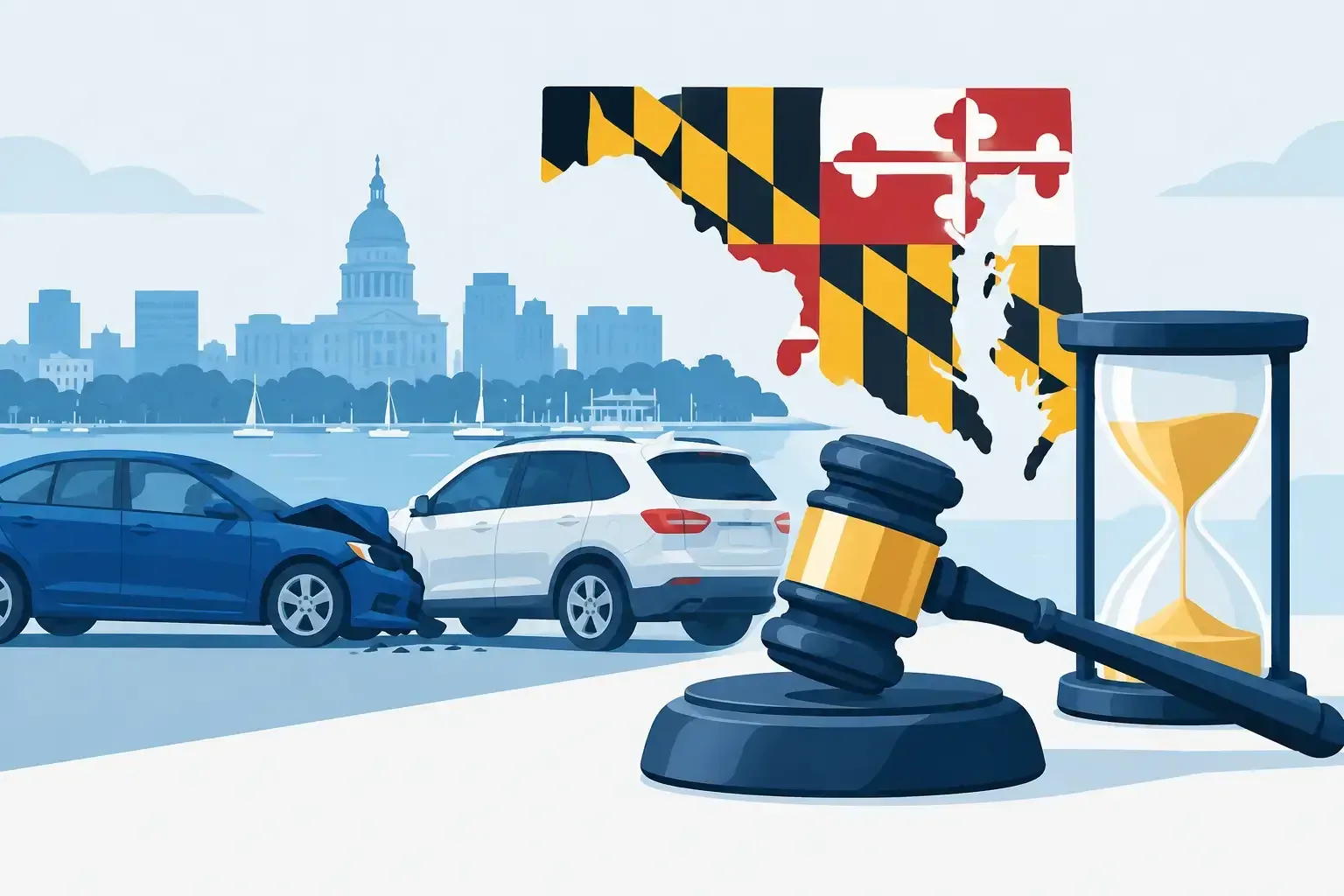
In most Maryland car accident injury cases, you have three years to file a lawsuit. This deadline generally comes from Maryland's civil statute of limitations, which applies to claims for personal injuries and property damage.
For a typical collision, the three-year period starts on the date of the crash. If you were injured in a rear-end collision on June 1, 2026, you would generally need to file your lawsuit by June 1, 2029.
Three years can sound like plenty of time. It is not always. Medical care may continue for months, insurers may question fault, witnesses may become harder to locate, and video evidence from nearby businesses or traffic cameras can disappear quickly. Waiting also gives the insurance company more time to argue that your injuries came from something other than the accident.
Just as importantly, filing an insurance claim is not the same as filing a lawsuit. A demand letter, a claim number, ongoing settlement talks, or an adjuster's promise to continue reviewing your case does not usually stop the limitations clock. If negotiations fail after the deadline passes, the insurer may have no reason to offer a fair settlement.
Why the Filing Deadline Matters So Much
A statute of limitations is a legal deadline. Once it expires, the at-fault driver and other defendants can ask the court to dismiss the case. In most situations, the court will do so, regardless of how severe the injury is or how strong the evidence may have been.
That result can be especially difficult for a family already facing financial pressure. A person may need treatment for a concussion, back injury, broken bone, or chronic pain while losing income at the same time. Compensation may be available for medical expenses, lost wages, future treatment, pain and suffering, and vehicle-related losses. But recovering those damages requires preserving the legal right to bring the claim.
Maryland is also a contributory negligence state. This means an injured person may be barred from recovery if they are found even slightly at fault for the crash. Because insurers understand this rule, they often look closely for statements, reports, or gaps in treatment they can use against a claimant. Early legal guidance can help protect both the deadline and the evidence needed to establish fault.
When the Three-Year Rule May Be Different
The usual deadline is straightforward, but certain facts can change the analysis. These exceptions are one reason it is wise to have a lawyer review your case well before the third anniversary of the collision.
Claims involving a government vehicle or agency
If a state, county, city, public school system, transit agency, police department, or other government entity may be responsible, a separate notice requirement may apply. In many cases, notice must be provided within one year of the injury.
For claims involving a Maryland local government, the Local Government Tort Claims Act generally requires timely written notice to the appropriate government official. Claims involving the State of Maryland have their own procedures, including notice to the State Treasurer or the Treasurer's designee. There can be limited arguments for excusing a late notice in some local-government cases, but no one should rely on an exception.
A government claim may still have a three-year lawsuit deadline, but missing the earlier notice requirement can damage or eliminate the case. The correct deadline depends on the agency involved, where the crash occurred, and the legal theory of liability.
Injuries to a child
When the person injured is under 18, Maryland law may pause the limitations period for that child's personal injury claim until adulthood. In many cases, the child then has time after turning 18 to bring the claim.
However, a parent's separate claim for medical bills or other expenses may have a different deadline. Families should not assume that every claim connected to a child's accident is automatically protected by the child's age.
Injuries discovered later
Some injuries are not immediately obvious. A person may feel shaken but decline an ambulance, only to develop serious neck pain, headaches, numbness, or cognitive symptoms later. Maryland recognizes a discovery rule in certain situations, meaning the clock may not begin until an injury was discovered or reasonably should have been discovered.
Still, this is not a safe reason to delay. In a standard car accident case, courts often treat the accident date as the starting point because the injured person knew a collision occurred and knew, or should have known, that it may have caused harm. The discovery rule is fact-specific and should be evaluated by counsel, not assumed.
A fatal accident
When a crash causes death, surviving family members may have a wrongful death claim. In Maryland, that claim generally must be filed within three years of the date of death. A separate survival action may also be available for the losses and suffering experienced by the person who died before death.
These claims can have different deadlines and different parties who may bring them. Prompt legal advice can help a family protect all available claims while they focus on grieving and caring for one another.
What to Do Before Time Runs Out
The days after a collision can be confusing, particularly when English is not your first language or when you are worried about work, immigration concerns, or how your family will manage. Your legal rights after an accident are not based on your immigration status. You deserve clear answers and respectful treatment.
Start by getting medical care and following through with recommended treatment. Medical records help protect your health and can also show how the crash affected your daily life. Keep copies of hospital paperwork, bills, prescriptions, repair estimates, photographs, and any correspondence from insurers.
If possible, preserve the police report, contact information for witnesses, and photos or videos of the vehicles and crash scene. Avoid giving a recorded statement or signing a broad medical authorization for the other driver's insurer before understanding what it could mean for your claim.
You should also write down what you remember while it is fresh. Include the location, weather, traffic conditions, what the other driver did, what you said to police, and the symptoms you experienced afterward. Small details can become meaningful when fault is disputed months later.
Do Not Let Settlement Talks Run Out the Clock
Insurance companies may seem cooperative at first. They may request records, offer to pay part of a bill, or tell you they are still evaluating the claim. None of those actions guarantees a settlement, and none necessarily protects your right to sue.
As the deadline approaches, an insurer may recognize that you have limited options. A low offer made near the end of the limitations period can put an injured person under unfair pressure. Filing a timely lawsuit does not always mean the case will go to trial. It often preserves your leverage while negotiations continue.
A lawyer can identify every potentially responsible party, assess available insurance coverage, calculate losses that may continue into the future, and make sure the proper legal documents are filed on time. That work is difficult to do well in the final days before a deadline.
Speak With a Maryland Car Accident Attorney Early
Every accident has details that can affect the deadline: the injured person's age, the identity of the driver, the vehicle owner, the involvement of a government agency, and when an injury became known. A quick consultation can help you understand which deadline applies to your situation and what steps should happen next.
At Anyere Law Firm, LLC, we listen to injured clients, explain their options in plain language, and fight for the compensation they need to move forward. You should not have to choose between focusing on your recovery and protecting your rights. The sooner you seek guidance after a Maryland crash, the more room you have to make informed decisions for yourself and your family.